LEVEL 1
Lifetime access to all course materials, Q & A access, Download availability of all course materials, Email Coach Support.

"Friendships are one of our greatest assets. I am talking about true friends. People that know the real you, and love you anyway. Not acquaintances or FB friends but the people who will sit with you through your darkest hours and still get up with you the next morning to do what needs to be done."
MARSHA FERRICK
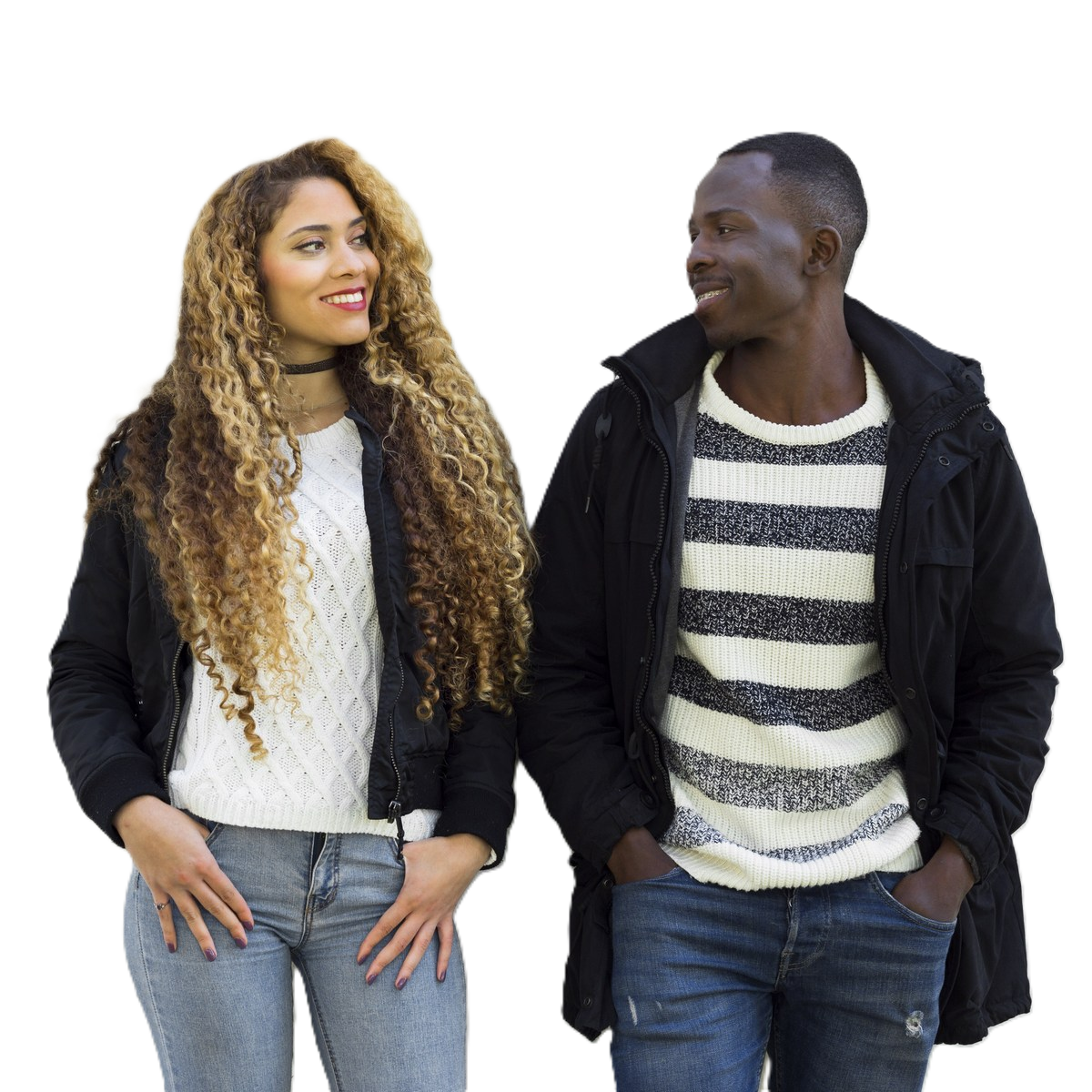
Create deeper more meaningful friendships-one intentional choice at a time.
Stop waiting for friends to show up.
Learn how to intentionally build friendships that are loyal and deeply satisfying.
Self-Paced • Practical • Evidence-Based • Lifetime Access


Friendship Fluency
Not every friend belongs in the same place in our lives
—and not every friendship that changes has failed.
Friendship is one of the richest and most varied forms of human connection.
We have acquaintances we enjoy seeing occasionally. Friends connected to particular activities or stages of life. People we turn to for laughter but not necessarily vulnerability. Friends with whom we share deeply personal parts of ourselves. And sometimes, if we are fortunate, lifelong relationships that have traveled beside us through decades of change.
We call all of these people friends.
But they are not all the same kind of relationship.
Friendships exist in different layers of closeness,
trust, intimacy, responsibility, and access.
Problems often arise when we do not recognize those differences.
We may expect too much from a casual friendship.
Share too much too soon.
Continue trusting someone after they have repeatedly
demonstrated that they are not trustworthy.
Become hurt because another person does not
consider the relationship as close as we do.
Hold onto a friendship long after it has become unhealthy.
Or end a relationship completely when what was really
needed was simply a little more distance.
Friendship Mastery is about learning to navigate these
relationships with greater awareness, wisdom, flexibility, and grace.
You will explore what healthy friendship looks like, how closeness develops, how trust is earned and maintained, how boundaries change depending upon the relationship, and how to recognize when a friendship needs greater investment, honest conversation, different expectations, more distance
—or occasionally, an ending.
The goal is not to collect more friends.
It is to become more skillful at creating, choosing,
maintaining, and navigating meaningful friendships.
What You’ll Practice
Through the lessons, reflections, and exercises
in this training, you will practice how to:
Friendship Comes in Layers
One of the most helpful friendship skills is recognizing
that not everyone needs equal access to us.
A new acquaintance does not automatically receive the same level of
trust as someone who has demonstrated reliability over twenty years.
A person can be delightful company and still not be
someone we turn to with our deepest vulnerabilities.
Someone may be a wonderful hiking friend, colleague, neighbor, horse friend, book friend, travel companion, or occasional lunch friend without ever becoming part of our innermost circle.
There is nothing wrong with that.
Healthy relationships have appropriate levels of intimacy.
Problems arise when we mistake friendliness for trustworthiness,
history for closeness, familiarity for safety, or someone’s desire
for access as evidence that we should provide it.
Friendship Mastery means learning to ask:
What kind of relationship is this?
How much trust has actually been earned?
What level of access feels appropriate?
What expectations reasonably belong here?
Not every relationship needs to become deeper in order to be valuable.
Trust Is Built, Not Declared
Trust develops through repeated experience.
Does this person do what they say they will do?
Can they keep confidences?
Can they tolerate disagreement?
Do they respect your boundaries?
Can they celebrate your successes?
Can they acknowledge when they have hurt you?
Do they show up when things become difficult?
Can you be yourself without continually managing their reactions?
And equally important:
Can they trust you?
Friendship is not simply about evaluating others.
We also need to examine what kind of friend we are.
Do we keep confidences?
Do we listen?
Do we make room for another person’s life?
Do we become possessive?
Do we disappear whenever life becomes inconvenient?
Do we respect limits?
Can we apologize?
Can we tolerate our friend’s growth even when it changes the relationship?
Healthy friendship asks something of both people.
Reciprocity Does Not Mean Keeping Score
Healthy friendships usually contain reciprocity.
But reciprocity does not mean every phone call, favor,
invitation, or act of support must be repaid immediately and equally.
Relationships naturally move through seasons.
One friend may need more support during a divorce,
illness, loss, career crisis, or family emergency.
Later, the balance may shift.
The more important question is whether
care generally travels in both directions over time.
Can both people speak?
Can both people need?
Can both people receive?
Can both people say no?
Can both people matter?
A friendship becomes difficult when one person is consistently
expected to give while the other consistently expects to receive.
Closeness Cannot Be Demanded
Friendship is voluntary.
That sounds obvious, but it has important implications.
We cannot require another person to consider us their closest friend.
We cannot demand invitations.
We cannot insist upon immediate responses.
We cannot dictate how much time someone spends with other friends.
We cannot require another person to disclose things
they would prefer to keep private.
We can certainly decide what we need from friendship.
But healthy relationships leave room for the other
person to decide what they are willing and able to offer.
Sometimes there is a mismatch.
That can hurt.
But mismatch does not necessarily mean either person is wrong.
It may simply mean we need to understand
the relationship more accurately.
When Friendship Changes
Friendships change because people change.
We move.
Marry.
Divorce.
Have children.
Change jobs.
Retire.
Develop new interests.
Experience illness.
Grow emotionally.
Change values.
Enter new communities.
Or simply move in different directions.
Sometimes a close friendship naturally becomes less central.
That does not erase what the relationship once meant.
Nor does every decrease in closeness require confrontation or blame.
One of the most graceful relationship skills
we can develop is the ability to say:
“This relationship has changed, and I can allow it to become what it is now.”
Moving Someone Outward Is Different From Cutting Them Off
Relationships are sometimes treated as though they have only two settings:
Close friend.
or
No relationship.
There are many possibilities in between.
Someone who repeatedly disappoints us may
no longer belong in our innermost circle but may still
be perfectly appropriate as an occasional social friend.
Someone we enjoy but cannot trust with confidential
information may remain part of our lives with different boundaries.
A friendship that becomes exhausting may need
less frequency rather than a dramatic ending.
We can change:
Changing the level of a relationship can sometimes preserve
what is good about it without repeatedly exposing us to what does not work.
Before Ending a Friendship, Ask What It Needs
There are certainly friendships that need to end.
Repeated betrayal, manipulation, cruelty, exploitation,
boundary violations, or fundamentally incompatible
expectations may make continued closeness unhealthy.
But not every disappointment requires an ending.
Sometimes friendship needs:
A conversation.
A boundary.
An apology.
A revised expectation.
More space.
Less access.
Acceptance of a difference.
Or simply time.
Before deciding that a friendship is over, it can be useful to ask:
Is this relationship truly unsafe or unhealthy—or am I hurt?
Have I communicated what is bothering me?
Does this person know what I need?
Am I expecting something this relationship was never designed to provide?
Could this friendship remain valuable at a different level?
Ending relationships is sometimes necessary.
But learning to adjust relationships rather than repeatedly
discard them is an important part of relational maturity.
Being a Friend During Difficult Times
Friendship becomes especially meaningful when life becomes difficult.
And yet supporting someone does not require us to fix their life.
Sometimes friendship looks like:
Listening.
Showing up.
Bringing dinner.
Sitting quietly.
Remembering the hard anniversary.
Checking back next week after everyone else has stopped asking.
Allowing someone to grieve without trying to make them feel better.
At the same time, friendship does not require unlimited availability.
We can care deeply about someone while still having boundaries.
We can say:
“I love you, and I don’t have the capacity tonight.”
Healthy friendship allows care and limits to coexist.
Conflict Does Not Automatically Mean the Friendship Is Bad
Two people can care about one another and still disappoint each other.
Misunderstandings happen.
Feelings get hurt.
Expectations differ.
People say things poorly.
Plans fall apart.
Good friendships are not necessarily those without conflict.
They are often relationships in which both people can eventually:
Talk.
Listen.
Take responsibility.
Repair.
Forgive when appropriate.
Learn something.
And move forward.
Conflict can weaken a friendship.
But handled well, it can also deepen trust.
Make Room for New Friendship
One of the challenges of adulthood is that friendships no longer
appear as effortlessly as they sometimes did when we were younger.
We may need to become intentional.
Show up repeatedly.
Initiate the invitation.
Join something.
Follow up.
Risk being the one who says:
“Would you like to get coffee?”
New friendships generally require repeated
contact before intimacy develops.
Not every attempt will become a
close relationship.
That is okay.
Friendship grows through small acts of availability,
curiosity, shared experience, and gradually earned trust.
Who Is This Training For?
Friendship Mastery may be especially helpful if you:
Friendship is not simply about finding people who treat us well.
It is also about learning how to choose wisely, trust gradually,
communicate honestly, adjust expectations, establish appropriate boundaries, repair when possible, release when necessary,
and offer others the kind of friendship we hope to receive.
Some friends walk beside us for a season.
Some remain for decades.
Wisdom is learning how to honor the relationship that
actually exists rather than continually demanding
the relationship we wish it were.






Licensed Clinical Psychologist Board Certified Professional Coach
All
Starter
Basic
Growth
Advanced
*Plan prices are subject to change
**Lifetime Access applies to materials only
***Groups & 1 to 1 Coaching must be completed within 3 Mos. of purchasing program
**** Equine Collaborated Coaching must be completed within 6 Mos. of purchasing program
Courses will vary in length. However you will have lifetime access to the courses you have purchased.
Yes. Although under extenuating circumstances some leeway can occur. Given the group is on-line it would be rare that someone would need to miss it due to lack of access.
We recommend that you complete the One to One(s) within the weeks you are attending the group.
The courses are individually priced. You can find the cost on the individual course landing page if you access the course directly from the main menu. The individual course only price is found on the All Courses page.
Every meaningful life change begins with one intentional step. If you're ready to stop waiting for friends to show up and start creating andd deepening friendships, I'd be honored to walk beside you.
Marsha Ferrick
Lifetime access to all course materials, Q & A access, Download availability of all course materials, Email Coach Support.
All LEVEL 1 features + 3 Mos. Weekly Skills Group
All LEVEL 1 features + 3 Mos. Weekly Skills Group + 1 Mini One to One Session
All LEVEL 1 features + 3 Mos. Weekly Skills Group + 6 Mini One to One Sessions + 1 Equine Collaborated Coaching Session
All LEVEL 1 features + 3 Mos. Weekly Skills Group + 3 Mini One to One Sessions
All LEVEL 1 features + 3 Mos. Weekly Skills Group-Participant + 3 Mos. Weekly Skills Group-Coach in Training + 9 Mini One to One Sessions + 1 Equine Collaborated Coaching Session