Creating a Better You

Creating a Better Us

Creating a Better World

Creating a Kinder World

Creating a Calmer World

Creating a Wiser World

The tools you need for the Situations You Encounter

DISTRACTING FROM DISTRESS

"Crisis doesn't need instant answers--balance the mind, then decide. "

Create Better Distress Tolerance Skills

life In Progress

Helping you one skill at at time to improve your ability to tolerate distress.

At LIFE IN PROGRESS it’s about learning how to tolerate distress:

• distract when feeling overwhelmed
• no major decision making
• tolerate stress at higher levels over time

Tolerating distress is not about making a decision. In reality, tolerating distressing is about regaining our balanced center before doing anything else of import.

Reasons We Fail to Tolerate Distress

Vulnerabilities

Lack of self care and environmental stressors make it more difficult to tolerate distress effectively.

Poor Boundaries

We fail to set limits and become overwhelmed.

Avoidance

We don’t take care of things in a timely manner and thus they become emergencies.

Fail to Listen

We do not pay attention to the messages our body is telling us to slow down, take a break.

Low Tolerance

We have little tolerance to stress, and regulating emotions.

Take Your Time. START HERE. Move at Your Own Speed

we can help you rebalance when times are hard

The Path to Wisdom Lies with the ability to distract when emotions feel unmanageable & skills bring us back to balance

Managing Distress

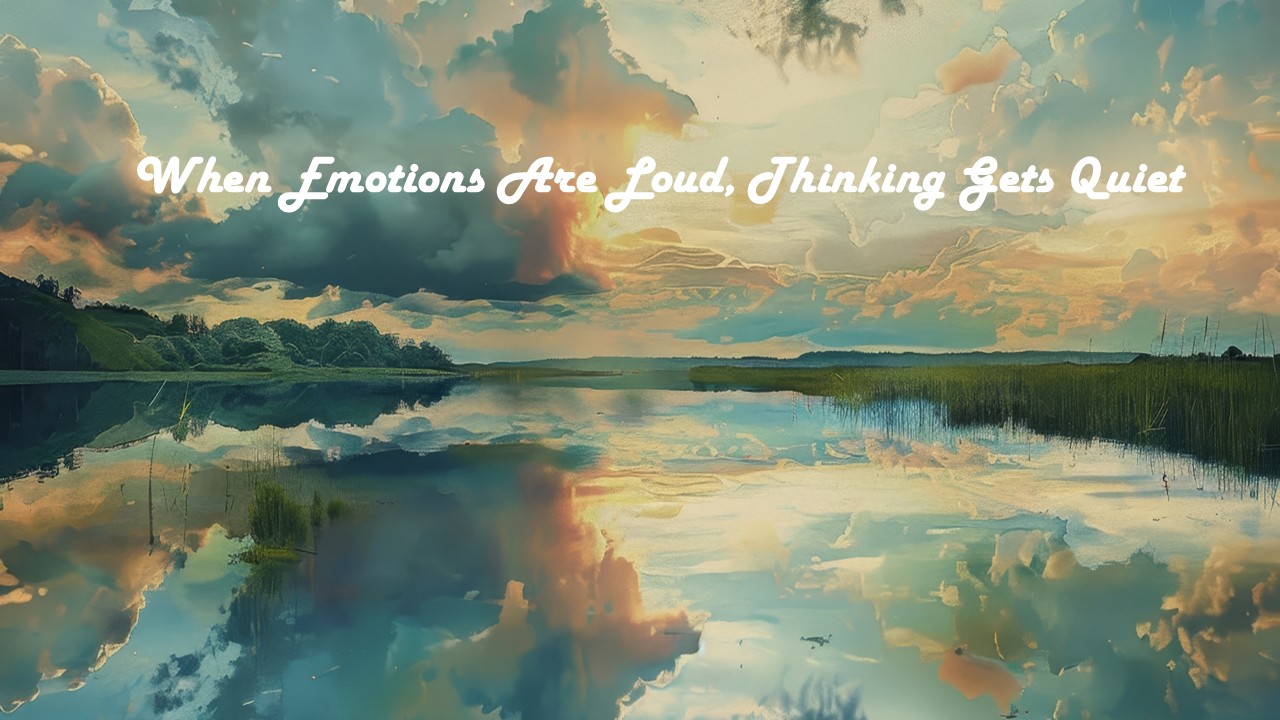
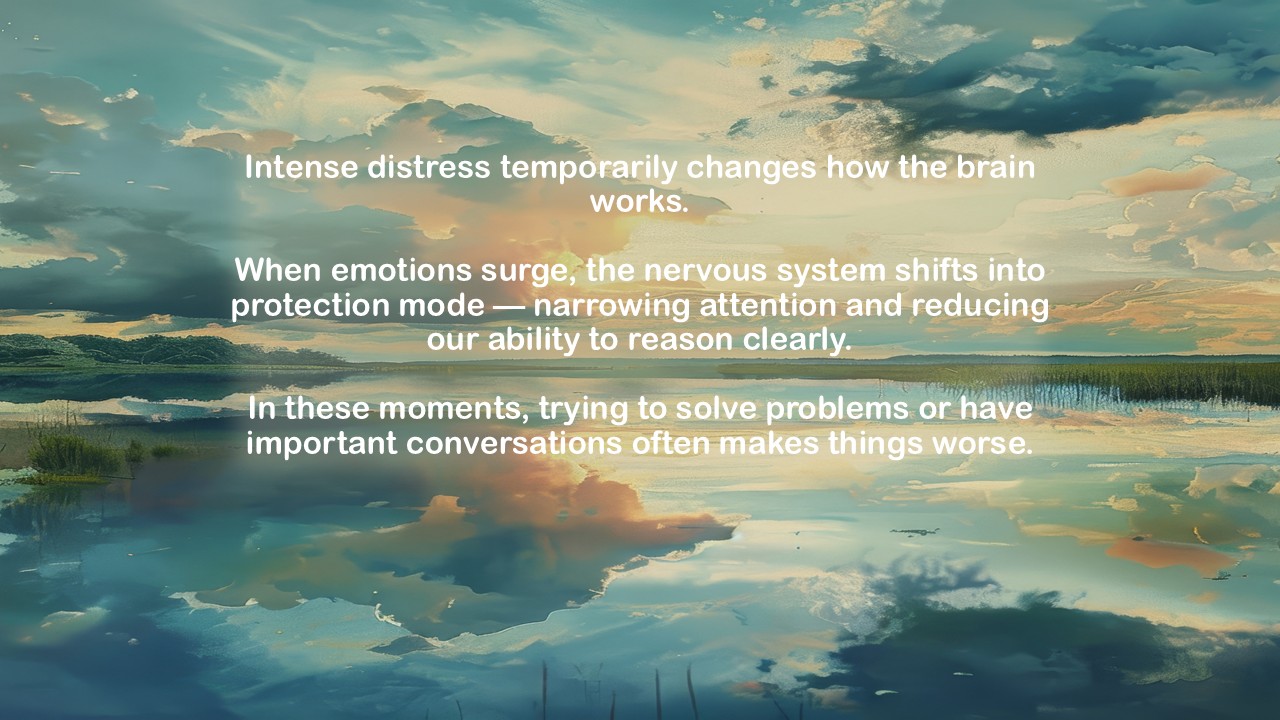
When emotional distress becomes intense, our nervous system shifts into survival mode. The brain’s primary goal in these moments is not problem solving, insight, or growth — it is protection. Heart rate increases, thinking narrows, emotions feel overwhelming, and our ability to reason or make balanced decisions temporarily decreases. In this state, trying to “figure things out” or force emotional processing often makes distress stronger rather than calmer.

Regulating Strategy

Distraction is not avoidance or denial. Healthy distraction is a temporary regulation strategy that gives the mind and body time to settle. Just as we would step away from physical danger to regain stability, emotional distraction allows our nervous system to move out of overwhelm and back toward balance. When intensity lowers, access to judgment, perspective, compassion, and problem-solving naturally returns.

Interrupting the Loop

During periods of high distress, continuing to focus on painful thoughts or feelings can unintentionally amplify them. The brain begins looping — replaying fears, regrets, or catastrophic predictions. Attention acts like fuel: whatever we repeatedly focus on grows stronger in the moment. Purposeful distraction interrupts this emotional escalation. It creates psychological space, preventing impulsive reactions, harmful decisions, or words spoken in moments we may later regret.

Cooling Toward Intention

Distraction also protects relationships and long-term wellbeing. When overwhelmed, people are more likely to react defensively, withdraw completely, or act in ways that do not reflect their values. Taking a temporary mental break allows emotions to cool so responses can later come from intention rather than reaction. In this way, distraction supports—not prevents—emotional responsibility.

Distraction VS Processing

Importantly, distraction is not meant to replace emotional processing. Difficult feelings still deserve attention, understanding, and care. The goal is timing. We first stabilize, then reflect. Once emotional intensity decreases, we are far better able to understand what happened, communicate effectively, and choose constructive next steps.

Distraction as Intention towards Wisdom

In essence, distraction is an act of self-care and wisdom. It recognizes that human beings cannot heal, learn, or connect well when emotionally flooded. By stepping away briefly, we create the conditions needed to return with clarity, steadiness, and self-compassion. Sometimes the most skillful thing we can do in moments of intense distress is not to push through — but to pause, redirect attention, and allow calm to re-enter the system.

WIZMINIS

444

Distress tolerance

Rating Your Level of Distress

RATING YOUR LEVEL OF DISTRESS USING SUBJECTIVE UNITS OF DISTRESS (SUDs)

Understanding SUDS

Subjective Units of Distress Scale

Emotions can feel overwhelming partly because they are difficult to measure. When distress rises, everything may feel equally urgent or intense. The Subjective Units of Distress Scale (SUDS) helps bring clarity by giving us a way to estimate how activated or calm we feel in a particular moment.

SUDS is a personal rating system that measures emotional distress on a scale from 0 to 100. It is called subjective because there is no right or wrong number — the rating reflects your internal experience, not an outside judgment.

Using a distress scale helps us answer an important question:

What skill do I need right now?

Rather than reacting automatically, we begin responding with awareness.

The SUDS Scale (0–100)

🟢 0–20 | Calm & Comfortable

  • Relaxed or peaceful
  • Thinking is clear
  • Body feels settled
  • Able to reflect and connect easily

Example:
Quiet contentment, feeling grounded, emotionally steady.

👉 Best time for reflection, learning, or emotional processing.

🟡 30–50 | Activated but Manageable

  • Noticeable stress or discomfort
  • Emotions present but tolerable
  • Attention slightly narrowed
  • Still able to pause and choose responses

Example:
Worry before an important conversation or mild frustration.

👉 Use grounding or soothing skills.

🟠 60–80 | High Distress

  • Strong emotional activation
  • Racing thoughts
  • Urge to react, argue, withdraw, or escape
  • Difficulty concentrating

Example:
Intense anxiety, anger, or emotional overwhelm.

👉 Distraction and regulation skills are recommended.

Processing now may increase distress.

🔴 90–100 | Emotional Flooding

  • Feeling overwhelmed or panicked
  • Thinking becomes rigid or chaotic
  • Fight, flight, freeze, or shutdown responses
  • Little access to reasoning or perspective

Example:
Worst distress you can remember feeling.

👉 Safety and stabilization come first.

No emotional processing should occur here.

Why SUDS Matters

When distress rises above about 60–70, the brain shifts toward survival functioning. Insight, empathy, and problem-solving temporarily decrease. Attempting deep conversations or emotional analysis at this level often leads to escalation rather than resolution.

The SUDS scale helps us recognize:

  • When to pause
  • When to self-soothe
  • When to distract
  • When we are ready to lean back in

Quick Decision Guide Using SUDS

SUDS Level

What Helps Most

0–30

Reflect, communicate, process

30–60

Grounding & calming

60–80

Distract & regulate

80–100

Stabilize & ensure safety

Practice Exercise

“Name Your Number”

Pause and ask yourself:

Right now, my distress level is: ____ /100

Then ask:

  • What does this number tell me?
  • Do I need calming or understanding?
  • What small step would lower this number by 5–10 points?

The goal is not zero distress. The goal is returning to a range where wise choices become possible.

Emotional awareness begins when we learn to notice intensity without judgment. The SUDS scale helps us meet ourselves honestly — responding with care rather than criticism — one regulated moment at a time.
When to Distract from Emotions?

WIZMINS

Browse the Carousel. Choose a Topic that Speaks to you. Click “READ MORE” on the flip side. 

Review the skill & information. Download the document for further study & practice. 

Why Do We Get Distressed

Lack of Skills

If we have difficulty regulating emotions then we will be more vulnerable to distress

Inadequate Self-Care

Inadequate self-care leaves us vulnerable to emotional dis-regulation and this to higher levels of distress.

Busyness

Busyness can lead to distress because we are not taking time to slow down and consider our options.

Unprocessed Histories

Unprocessed material from our past may trigger us into immense distress over what others may see as insignificant events.

Environmental Stressors

Stressors outside ourselves that we have no control may impact us and create a greater vulnerability to distress.


Lack of Skills Inadequate Self-Care Busyness Unprocessed Histories Environmental Stressors

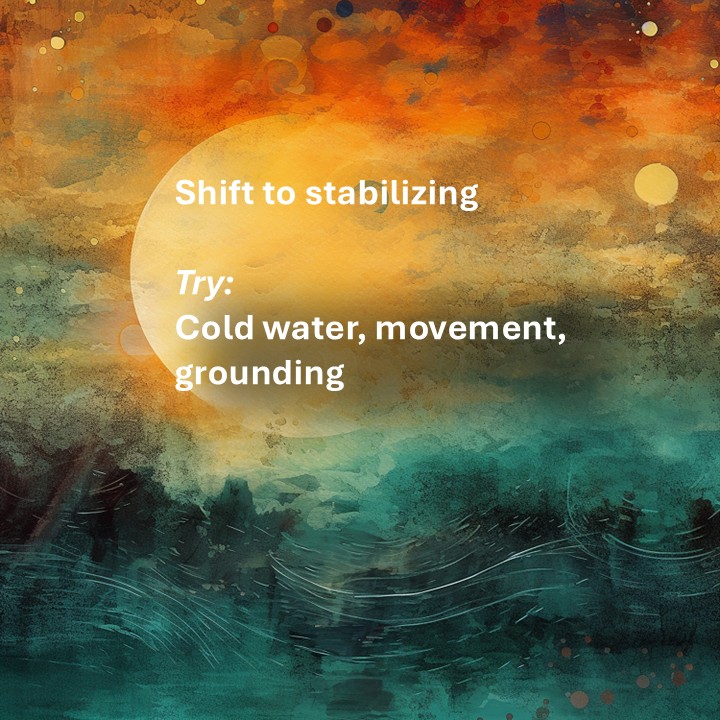
Reclaiming your calm takes time when you are distressed. Focus on small doable tasks or activities. Take your time until you have found your calm.

  • -Say no to anything hard
  • -Do a simple task or activity
  • -Increase self compassion
  • -Clear your schedule

Give yourself grace, slow down, find the eye in the midst of the storm

WIZMIND ENCOURAGEMENTS

WHERE DO YOU SEE YOURSELF RIGHT NOW?

Between cleaning the kitchen and doing an easy crossword puzzle which would be the best activity when distressed?

Both would be appropriate.

What is the difference between regulating emotions and tolerating distress?

Regulating emotions is a daily activity which can be maintained with good self-care. Tolerating distress is about being able to manage higher levels of stress without becoming disregulated.

Why is decision making not a good idea when distressed?

When distressed we are in emotional mind. Decisions are best made in balanced mind.

True or false when under distress doing more of the same is helpful?

False

Reaching our for supprt when distressed is often helpful.

Support can be helpful if it can help us distract from our own distress for a time.

Small Ways to Begin: Start Where You Are

MASTER WHAT MATTERS: Discover What You Can Do

EXPLORE

IN-DEPTH LEARN WIZORS

Experience SPECIFICALLY designed skill courses for depth learning for your own growth or become a Wiz Master Coach this thoughtfully developed for creating a better you. 

DETAILS HEREClick Now

PREPARE

NO THREAT PRACTICE WIZPRACS

WIZPRACS are skill focused experiential groups where you can learn practice and refine your skills without having to deal with difficult emotional situations you might encounter at home or work.

DETAILS HEREClick Now

REFINE

MASTERY PRACTICE WIZ1-2-1

Meet with a skill WIZ MASTER to perfect a skill or a number of skills in a particular area. Invest in your most important resource, yourself. Refinement of skills makes life interactions most effective.

DETAILS HEREClick Now

TEACH & TRAIN

CHANGE THE WORLD WIZARDRY SCHOOL TRAINING

Be a Wiz Master Giode join our training program that allows skills mastery in  breadth-depth to help create a better world.

DETAILS HERE

CURATED MEDIA FOR EXPLORATION

Playlist

1 Videos
SKILLS

Mastery

DOWNLOADABLE FILLABLE PDF

SKILLS

Mastery

DOWNLOADABLE FILLABLE PDF

SKILLS

Mastery

DOWNLOADABLE FILLABLE PDF

SKILLS

Mastery

DOWNLOADABLE FILLABLE PDF

SKILLS

Mastery

DOWNLOADABLE FILLABLE PDF

SKILLS

Mastery

DOWNLOADABLE FILLABLE PDF

SKILLS

Mastery

DOWNLOADABLE FILLABLE PDF

SKILLS

Mastery

DOWNLOADABLE FILLABLE PDF

SKILLS

Mastery

DOWNLOADABLE FILLABLE PDF

  • OPEN

    OPEN PDF FOR INFORMATION ABOUT THE SKILL

  • READ

    LEARN HOW TO USE A SKILL(S)

  • DOWNLOAD

    KEEP THE PDF TO PRACTICE & REFINE THIS SKILL

  • SKILL EXERCISES

    PRACTICE / REFLECTION ON USE OF THIS SKILL IN YOUR LIFE